The Kenan Fellows Program for Curriculum and Leadership Development is a competitive two-year fellowship offered to K-12 public school teachers.
The mission of the Kenan Fellows Program is to enhance curriculum relevance for the benefit of all students; engage teachers, business, and universities through unique professional collaboration; and promote growth opportunities for teachers and the teaching profession.
The Kenan Fellows Program for Curriculum and Leadership Development, established in 2000, grew from a community effort to address the retention of effective math and science teachers in North Carolina’s Research Triangle region. In response to the work of prominent organizations that have focused public attention on critical needs in our public schools, it recognizes the key role of strong teachers and the value of STEM (science, technology, engineering and math) education in the global economy.
In 2000, the National Commission on Mathematics and Science Teaching for the 21st Century emphasized the importance of high quality math and science instruction to the nation’s economic health and made specific recommendations to meet that need, including the establishment of summer institutes, exemplary professional development, good leadership training, and incentive programs to make the teaching profession more attractive. The National Science Board’s assessment of the nation’s scientific and technical capacity in 2008 showed that despite some recent gains, “most 4th, 8th, and 12th graders do not perform at levels considered proficient for their grade” and “U.S. students perform below average in mathematics and science for industrialized countries.”
The Kenan Fellows Program is designed to meet these challenges.
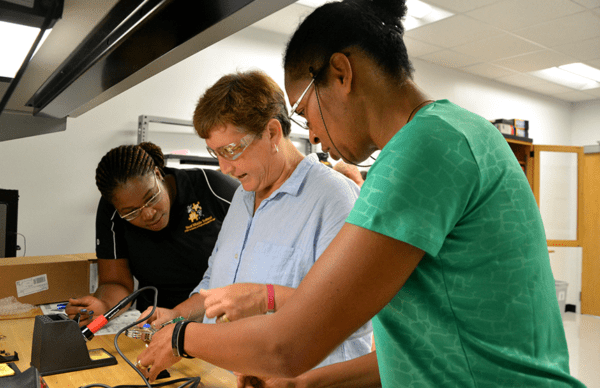
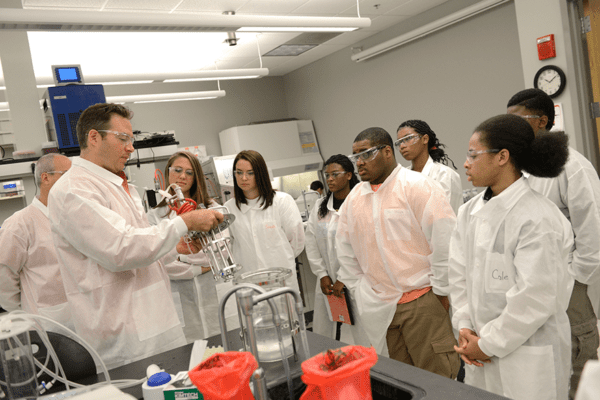
The Kenan Fellows Program taps the wealth of professional expertise in North Carolina’s university and private sector research facilities. The program enriches teachers’ knowledge and promotes innovation and creativity by supporting collaboration between K-12 public school teachers and professionals in rapidly developing areas of science, technology, engineering and math. Teachers selected as Fellows engage in two-year partnerships with distinguished scientists to learn about important new developments and to gain an understanding of the significance of current research and scientific practice for students.
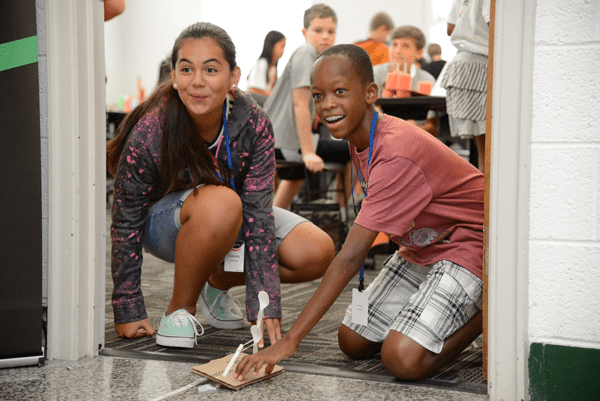
Each Mentor/Fellow pair works to translate the research experience into relevant lessons for use in classrooms. Interaction with practitioners of state-of-the-art science, and professional development in the area of curriculum design helps Kenan Fellows create innovative curricular tools and resources aligned with the North Carolina Standard Course of Study. In Summer Institutes focused on instructional leadership, Fellows build advanced skills in collegial environments that allow for sharing of knowledge and encourage them to apply their experiences in the context of their own classrooms. The 21st Century workplace challenges students to be problem solvers, team players and to think systemically. Relevant and engaging lessons designed by Fellows reflect those needs by providing rich, new opportunities for hands-on, inquiry-based study.
The Kenan Fellows Program builds strong leadership skills in outstanding teachers eager to develop their understanding of the real “enterprise” of scientific research and translate their new knowledge into improved teaching and learning in their classrooms. Fellows work to develop strong communication and advocacy skills. They engage regularly in dialog with leaders and policy-makers whose work impacts schools and classrooms. They learn how to maximize the effectiveness of the diverse talents in their school communities. Over time, the Kenan Fellows Program seeks to build a network of highly skilled teacher leaders committed to improving the quality of math and science education in classrooms across North Carolina.
The Kenan Fellows Program is an initiative of the Kenan Institute for Engineering, Technology & Science, and is generously supported by funding from business, government, foundations, research grants, and individual partners.