NCBI at NC State
"Healing Into Action"

NCBI Logo
See the Office for Equal Opportunity website for more Training & Educational Opportunities

Building Bridges: Strengthening Leadership for Diverse Communities

The National Coalition Building Institute (NCBI) has stated that "...an effective diversity training program must teach conflict resolution skills; effective listening; how to manage dialogue across group lines and a rationale for creating a welcoming workplace that becomes everyone's responsibility." In order to bring such training to our campus, NC State University has established a Campus Affiliate Chapter, through which we present the Building Bridges program on our campus.

The NCBI program is just one of many efforts on campus to educate students and employees about issues of discrimination, harassment, prejudice, and diversity. Other programs include Study Circles and the Equal Opportunity Institute, as well as programs offered by the Office of Diversity and African American Affairs

Any member of the NC State University community may attend this workshop free of charge. This includes all employees, students, and participants of the Equal Opportunity Institute. Registration is taken on a first-come, first-served basis. You may also request a workshop for your group of 15 or more participants.

Building Bridges: Strengthening Leadership for Diverse Communities will allow you to gain self-awareness, stretch beyond your comfort zone, and gain new understanding. The unique workshop is interactive, experiential, and high energy. Participants are both teachers and learners.

The full workshop lasts approximately six hours, during which time participants engage in small group and large group discussions. In this workshop, you will: 

  • Celebrate similarities and differences.
  • Identify misinformation about other groups.
  • Identify and heal from internalized oppression.
  • Claim pride in your own group identities.
  • Gain empowerment by learning ways to challenge bigoted comments and actions. 

Controversial Issues Model

NCBI has developed a model for conflict resolution. This model teaches participants skills to handle tough interpersonal and intergroup conflicts. Workshops examine controversial issues through a positive process. Participants learn to reframe controversial issues into a context where all parties are able to work toward a common solution. This model is taught in the Building Bridges: Leading Diverse Groups Through Conflict workshop.

See also: NCBI Community Reponse: Educate, Empower, and Develop (CREED)

Workshop Dates & Registration

Workshops are offered at the following times and also by request (see below): 

Building Bridges: Strengthening Leadership for Diverse Communities: Parts I & II

  • Wed, Aug 27, 2008 (10:00-4:00), Brown Room, Talley Student Center
    (Sponsored by OEO) - Register with OEO

  • Wed, Nov 19, 2008 (9:00-4:30), Room 3118, Talley Student Center
    (Sponsored by OEO) - Register with OEO

  • Thu, Apr 9, 2009 (9:00-4:30), Room 3118, Talley Student Center
    (Sponsored by OEO) - Register with OEO

Building Bridges: Strengthening Leadership for Diverse Communities: Part I

Please note: This workshop and the following workshop are the same as the all-day workshop listed above, except divided into two parts.


  • (Sponsored by LDS) - Register with LDS

Building Bridges: Strengthening Leadership for Diverse Communities: Part II

Please note: This workshop and the previous workshop are the same as the all-day workshop listed above, except divided into two parts.


  • (Sponsored by LDS) - Register with LDS

Building Bridges: Leading Diverse Groups Through Conflict

Please note: Although not required, it is recommended that you attend Strengthening Leadership for Diverse Communities before attending this workshop.


  • (Sponsored by LDS) - Register with LDS

Additional Information

These workshops were developed by the National Coalition Building Institute (NCBI) and are presented by trained NC State's NCBI Team of Facilitators.

Interested in a Workshop Just for Your Group?

NC State University departments and organizations may request an NCBI workshop for groups of 15 or more by submitting our online NCBI Workshop Request Form or contacting Beverly Jones Williams, 919-513-3836. Please make your request at least 30 days in advance of the preferred date of the workshop.

Requests for Accommodations

Individuals with disabilities who have requests for accommodations may contact: Gloria Hunt, 919-513-1151 (voice), 919-515-9617 (tty) or 919-513-1428 (fax). Requests must be made at least 2 weeks prior to your workshop. 

Comments from Participants

The following are comments from participant evaluations following the NCBI Building Bridges: Strengthening Leadership for Diverse Communities Workshop at NC State University:

· “Good team building and good for comfort level among peers.”

· “Awareness of “social records” is important.”

· “Gave people a chance to voice issues when they otherwise may not have the opportunity.”

· “The activities were interesting, especially the First Thoughts piece.”

· “Very valuable course. I feel I can open up to people more effectively now.”

· “Presenters really made it comfortable to speak freely and helped bring issues out.”

· “This workshop should be mandatory for all NC State workers.”

· “Loved personal testimonies.”

· “Great opportunity to practice effective techniques! Thanks.”

· “I enjoyed this so much and I will definitely recommend this to everyone.”

· “The workshop most definitely increased my knowledge regarding diversity.”

· “I feel this is very educational and something that would open others' eyes to the world (people
around them).”

· “I became more aware of stereotypes, prejudices and I know how to approach them.”

· “Excellent training!!!”

· “I felt welcomed.”

· “I liked how we were able to share anything and feel comfortable about it.”

· “This is a great way to promote awareness.”

· “Highly recommend this workshop, and I wish more of my friends were here.”

· “The workshop opens ones eyes to more diversity.”

· “This was a great workshop and I learned so much!”

· “The workshop increased my knowledge most on the impact of discrimination.”

· “I enjoyed all the interactive parts.”

· “Great course!”

· “The instructors were outstanding!”

· “The role plays were fun and an interactive way of learning.”

· “Thank you!”

· “Great workshop - I enjoyed the activities and interaction with people in class.”

· “This workshop helped me to realize many new ways to help bring people together.”

· “The facilitators were great and they were open and they made it a comfortable environment to discuss race issues.”

· “I am more aware of my own prejudices and am able to confront these attitudes in a productive manner.”

NCBI and Campus Affiliate Chapters 

The National Coalition Building Institute (NCBI) has conducted programs on hundreds of college and university campuses across North American and the Pacific. They have launched campus affiliate chapters on sixty campuses where faculty, students, and administrators have made an institutional commitment to using NCBI programs as a mechanism to provide an ongoing response to discrimination, oppression and handling controversial issues. More recently, the Carolina Diversity Training Coalition was also formed.

An NCBI campus affiliate is made up of a team of students, faculty and staff from various disciplines who provide a powerful leadership resource for the campus. The team provides pro-active workshops to improve the overall campus climate for diversity by building a more inclusive environment and teaches skills in how to effectively shift prejudicial attitudes and be powerful allies for one another. The team is also trained to intervene when tough intergroup conflict arises on the campus or between the campus and the community. 

An NCBI affiliate is launched with a 3-day "Train-the-Trainer Seminar." In this seminar, participants learn how to lead the award-winning NCBI Prejudice Reduction Workshop and learn the NCBI Controversial Issue Process. Following this seminar, a campus affiliate director is selected in consultation with the institution. The person serves as the liaison with the NCBI National Office and provides the leadership for the campus team. The team director receives monthly telephone support and supervision from the NCBI Campus Program Director. 

NC State University launched its campus affiliate in March 2001. Thirty-three NC State University team members were trained to facilitate the NCBI Prejudice Reduction Workshop on our campus. Our campus Director is Beverly Jones Williams, 919-513-3836. Our campus Assistant Director is Valerie Ball, 919-513-6520. 

NCBI Facilitators at NC State

About the 3-Day Train-the-Trainer Seminar 

The NCBI 3-Day Train-the-Trainer Seminar prepares each participant to lead 2 unique programs. Participants learn how to lead the award-winning NCBI Prejudice Reduction Workshop ("Building Bridges"). The Prejudice Reduction Workshop is a one-day workshop that has been effectively implemented in hundreds of schools, universities, corporations, community groups, churches and synagogues around the world. At the Train-the-Trainer Seminar, participants meet in small learning groups where they practice leading different components of the model. 

In addition to learning how to lead the NCBI Prejudice Reduction Workshop, participants learn how to lead the NCBI Controversial Issue Process. The Controversial Issue Process helps individuals and groups reframe heated emotional/political debates by learning how to take the heartfelt concerns of each side into account. 

NCBI's approach of combining emotional healing work with concrete skill training enables participants to learn quickly in a safe environment that supports individual learning. The diversity among the participants provides a powerful training experience. 

NC State Trainers/Facilitators

NC State faculty, staff, and students interested in becoming NCBI Facilitators must meet the following obligations: 

  • Complete the 3-Day Train-the-Trainer seminar.
  • Be a part of our NCBI Team.
  • Co-facilitate three "Building Bridges" workshops per year for campus units and groups.
  • Attend approximately one NCBI Team meeting per month.

Train-the-Trainer Seminar at NC State 

Our NCBI Team has joined the Carolina Coalition, which sponsors a Train-the-Trainer seminar each September.

If you would like to be notified of future train-the trainer opportunities, contact Beverly Jones Williams, 919-513-3836.

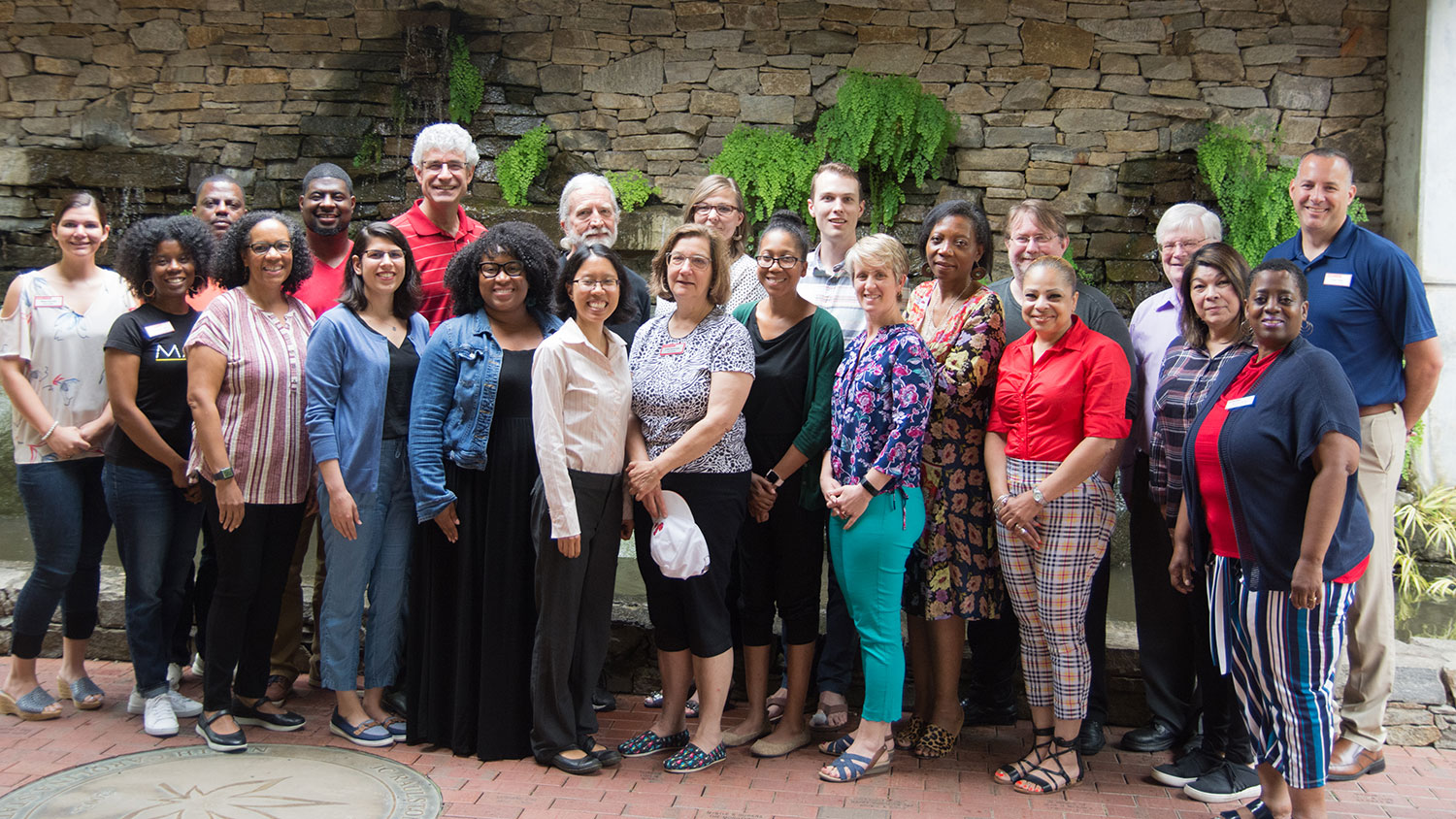
NC State's NCBI Team of Facilitators

The following are our campus team members: 

  • Ball, Valerie, College of Veterinary Medicine* - Assistant Affiliate Director
  • Tongsri, Joy, Park Scholarships* - Secretary
  • Branker, Cheryl, Disability Services Office
  • Brown, Edward, College of Textiles
  • Callanan, Roger, Undergraduate Academic Programs
  • Candia, Bonnie, University Housing
  • Cannedy, Allen, College of Veterinary Medicine*
  • Circosta, Amy, Office for Equal Opportunity
  • Clarke, Sherlonda, University Housing*
  • Clift, Charles, College of Veterinary Medicine
  • Conoly, Sandra, Educational Talent Search
  • Cowen, Peter, College of Veterinary Medicine*
  • Donovon, Johanna, College of Veterinary Medicine
  • Duhart, Heather, First Year College
  • Ebron, Ebony, University Housing
  • Grantham, Patricia, Facilities Operations
  • Gumpertz, Marcia, Diversity & African American Affairs
  • Hall-Campbell, Niambi, Psychology
  • Harrison, Aliana, University Housing
  • Hope, Shariva, Campus Activities
  • Horton, Johanna, University Housing
  • Howard, Janet, Office for Equal Opportunity*
  • Kee, Paris, University Housing
  • LaBarbera, Lisa, University Housing
  • McClure, Bonita, Social Work
  • Morrison, Hassel, University Housing*
  • Robinson, Erin, Office of Advising Support, Information and Services
  • Swallow, Bill, Statistics
  • Talley, Marie, Foundations Accounting
  • Taylor, Betsy, College of Veterinary Medicine
  • Wallace, Jordan, University Housing
  • Weeden, Laci, Women's Center
  • Williams, Beverly, Office for Equal Opportunity*
  • Willis, TJ, Campus Activities
  • Woodard, Joanne, Office for Equal Opportunity
  • Ziga, Kathy, First Year College

Asterisk (*) indicates member of NC State's NCBI Executive Leadership Team.

NCBI's Operational Assumptions

  1. To train teams of peer leaders is the most effective way to empower people to take leadership in reducing racism. 

    Often the greatest obstacle to taking action to address racism and other forms of discrimination is the sense that individual initiatives have a minimal effect in light of the enormity of the problem. NCBI's strategy to overcome this key obstacle is to train a corps of employees who reclaim power by leading concrete, replicable prejudice reduction workshops in a variety of work settings. 

  2. Programs to welcome diversity require an ongoing institutional effort.

    Too often the only systemwide effort to address diversity issues are briefings concerning civil rights statutes. More needs to be done. The most effective training teams include the participation of all employees, from the most senior administrator to the most recent recruit. 

    The establishment of proactive training programs that build strong intergroup relations on are more effective than programs that respond to specific incidents of racism or crises.

  3. There is a tendency for organizations to launch prejudice reduction programs only following a painful series of racial incidents. Although this response is understandable and at times appropriate, one may be left with the false impression that the primary goal of this work is to curtail overt acts of bigotry. An effective prejudice reduction program, however, must be much more than crisis intervention. The peer training model offers a constructive preventive alternative to crisis intervention. 

  4. Programs that welcome diversity need to include all of the visible and invisible differences found in the workplace [and classroom].

    Racism in the U.S., particularly in regard to African-Americans, must always be a primary focus of any prejudice reduction program. In addition, a major institutional effort to welcome diversity should be inclusive of the many visible and invisible differences among employees [and students], including nationality, race, ethnicity, gender, sexual orientation, religious affiliation, physical challenges, age, and socioeconomic class. 

    One of the more controversial issues in prejudice reduction work is whether to address a range of discrimination issues or to focus solely on racism. The concern of many anti-racism activists is that the inclusion of other issues can be used as a convenient tactic to avoid the more difficult work on racism. NCBI has found that the effectiveness of anti-racism work is actually enhanced by including a discussion of other institutionalized forms of discrimination. 

  5. Prejudice reduction programs that are based on guilt, moralizing, or condemnation often rigidify prejudicial attitudes.

    A great challenge in doing anti-racism work is avoiding two extremes; if people are targeted and required to label themselves as racists, sexists, etc., they can quickly become defensive and thereby lost to the work; if the programs are too comfortable, the hard issues never get raised and the racism goes unchallenged. NCBI's prejudice reduction workshop model strives for a proper balance by assisting participants to take risks and to raise tough issues without violating their own sense of integrity and self-worth. 

  6. Anti-racism programs are most effectively conducted with a hopeful, upbeat, sometimes even raucous tone.

    The effects of discrimination are serious, and therefore many mistakenly assume that effective anti-racism work requires a deadly serious approach. In fact, the most empowering NCBI programs left eager to fight against institutionalized racism, have always included boisterous cheering and riotous laughter alongside more sober moments.

The text above was taken chiefly from "Peer Training Strategies for Welcoming Diversity" (Cherie R. Brown and George J. Mazza, 1991), the NCBI website, and other NCBI materials.

Updated on 12/15/08 by EMS